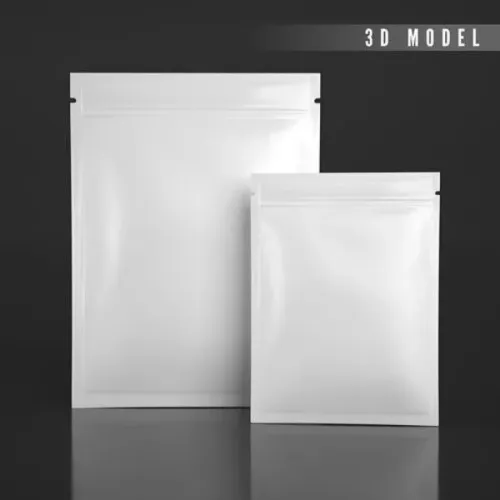
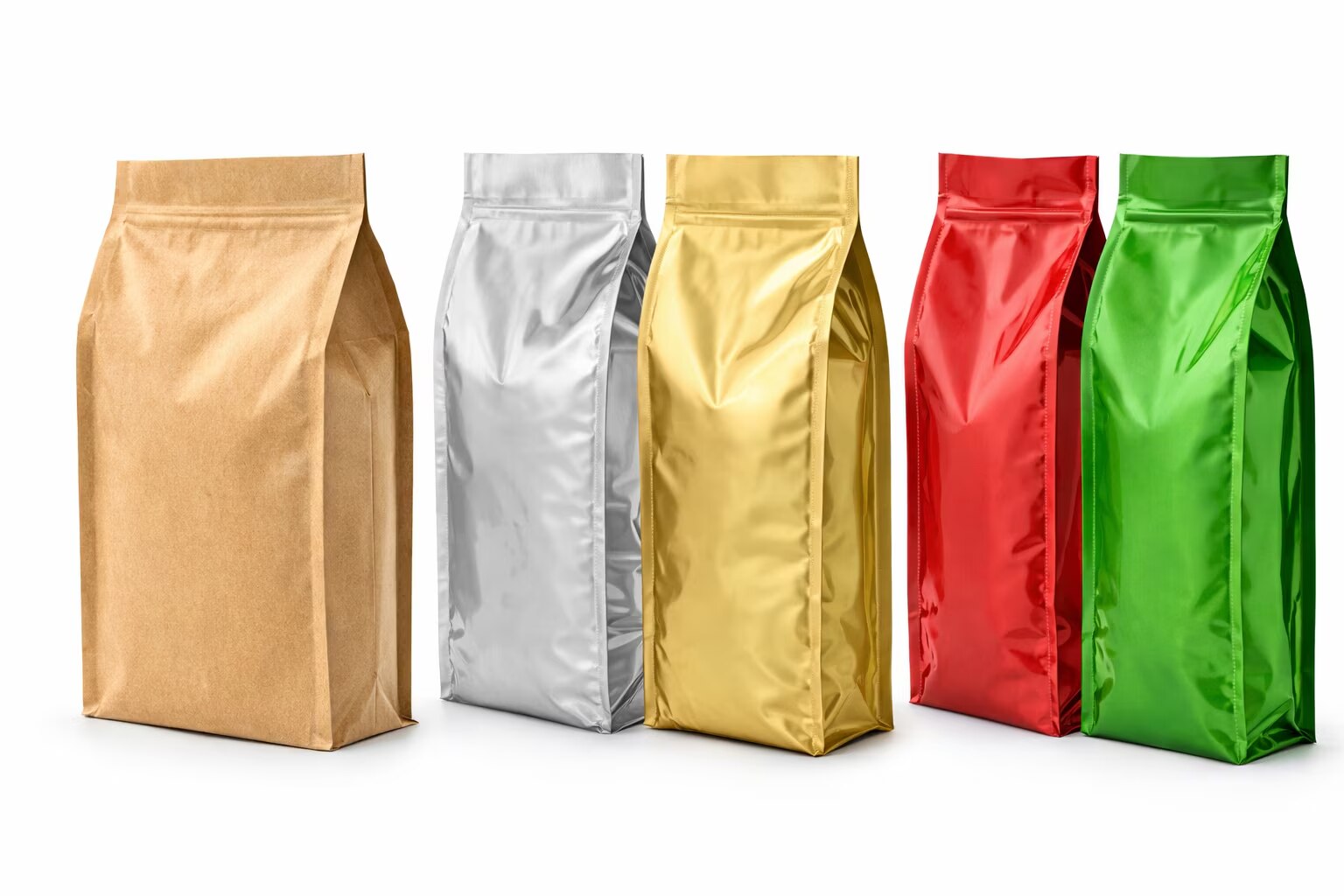
A pouch that fits the product on paper can still fail at the handle, lose usable volume to seal margins, or become unstable when filled. The right comparison starts with finished internal dimensions, product density, gusset geometry, handle load transfer, and filled-pouch testing—not the product name alone.
Key takeaways
- Match pouch dimensions to product volume, density, shape, and required headspace.
- Specify the handle opening, clearance, seal width, and load path before ordering.
- Test filled pouches for seal creep, handle tearing, leakage, and stacking stability.
- Give suppliers a written test brief with dimensions, film structure, and load targets.
What the Fifth Seal Changes in the Finished Pouch
The fifth seal is usually a transverse seal across the upper body, below the opening or handle zone. Its exact position is not fixed by the name: some converters place it at the top edge, while others use it as an internal reinforcement line.
Ask for a finished-pouch drawing showing the seal location, width, and distance from the handle.
That extra seal reduces usable height because its seal land cannot hold product. A wide seal also narrows the fillable panel and can force more headspace. In return, it restrains panel flexing, making the pouch feel firmer and helping the handle area transfer load across a broader section instead of concentrating it at one edge.
Visually, the fifth seal creates a deliberate framed line that can sharpen the pouch profile, but poor registration can leave it uneven against the artwork or handle patch. It also does not guarantee leak resistance.
A sound seal adds another barrier path; a contaminated or misaligned seal adds another failure point where channels can leak under pressure.
For five side seal pouches with handle, compare the finished seal width, internal dimensions, and filled load test rather than the machine setting or front-panel appearance. A reinforced fifth seal can support dense or heavy contents, while a simple narrow construction suits low-payload packs.
Wider sealing consumes volume, so the gain in stiffness and leak tolerance must justify the lost capacity.
Match the Construction to Small, Medium, Bulky, and Dense Products
A plastic handle side seal pouch for a 500 g snack cannot be specified like one carrying 10 kg of dense powder. Match the construction to fill weight, product shape, settling, and the position of the centre of gravity; the same finished dimensions do not establish the same carrying capacity.
| Construction | Suitable product | Practical starting point |
|---|---|---|
| Flat five-side-seal with punched handle | Small, low-payload goods up to about 1 kg; soft sachets, snacks, or small granules | Use a compact footprint and low-material construction. Test seal flexing after filling. |
| Flat construction with reinforcement patch | Medium retail packs around 1–5 kg; powders or products that settle toward the bottom | Add a wider handle load-transfer zone. Otherwise the top seal carries the entire load. |
| Gusseted five-side-seal, 40–100 mm gusset | Bulky but lightweight items; irregular shapes and compressible goods | Gain volume without excessive width. Check that the taller pouch does not fold into the handle area. |
| Deep-gusseted construction with reinforced load zone | Dense granules, powder, or hardware above about 5 kg | Specify stronger film, wider seals, and a tested handle attachment. Sharp edges need abrasion and drop testing. |
| Tall, wide-format gusseted pouch | Large soft products that settle slowly or remain uneven after filling | Control headspace and handle position so the load does not swing during carrying or palletizing. |
Treat these weight bands as selection points, not ratings. Request a filled-load test using the actual product, including settling time, drop condition, and repeated opening-and-carry cycles.
Compare Handle Types by Clearance, Load Path, and Failure Risk
An integral cutout handle is adequate for a small, low-payload pack when the product stays below the handle zone and the top film does not carry sharp or shifting loads. A welded handle or reinforcement patch is needed when mass, drop impact, or repeated carrying could tear the cutout or peel the laminate.
| Option | Clearance and load path | Failure risk | Best fit |
|---|---|---|---|
| Integral cutout | The hand opening is punched from the pouch web; load travels through the remaining top film and side-seal area. Keep it above the fill line and away from top-seal transitions. | The cutout removes material, concentrating stress at its corners. Overfilling, hard edges, and sudden lifting can start a tear. | Small, light products with stable settling and limited carry cycles |
| Welded handle | A separate plastic handle transfers force through welded attachment zones rather than a punched opening. | Poor weld temperature, contamination, or uneven registration can cause peel-off or partial attachment. | Medium or heavy packs needing a larger grip and repeated handling |
| Reinforcement patch | A welded patch spreads the handle load across a wider laminate area before force reaches the pouch film. | Extra interfaces create delamination and seal-contamination risks if welding is poorly controlled. | Dense, bulky, sharp-edged, or drop-prone products |
Compare five side seal pouches with handle by tested filled load, not empty appearance. Request the attachment sequence, patch dimensions, weld width, filled drop-test result, and opening-and-carry cycle count. A thicker film alone does not repair a narrow load-transfer zone or a handle placed inside the effective fill area.
Calculate Dimensions, Seals, Film, and Headspace Before Ordering
Measure the product after settling, not while it is fluffed or held in a carton. Record filled length, width, height, fill weight, sharp edges, and the space needed for scooping or pouring; dense powder and compressible goods need different allowances.
1. Specify the opening from the largest product dimension and the filling method. Add clearance for scoops, spouts, or hand access, then show the opening location on a drawing.
2. Give finished seal widths, measured on the completed pouch, for every edge. Wider seals improve burst tolerance but consume volume, so state the minimum usable internal width rather than only the machine setting.
3. Define gusset depth as the finished folded distance and provide internal width, height, and gusset dimensions together. A drawing must show whether the fifth seal crosses the gusset or sits on a flat panel.
4. Name the laminate layers, resin or film types, total gauge, printing side, and barrier target. Match stiffness and puncture resistance to the product; sharp hardware needs a different structure from soft goods or granular food.
5. Set headspace after filling and settling, leaving enough room for sealing without trapping product in the seal. Reserve artwork clearance outside every seal, handle weld, fold, tear notch, and opening; keep registration-sensitive text away from those zones.
Ask suppliers, including those found through “custom handle pouches in Ahmedabad,” for empty-pouch mass, finished dimensions, gauge, seal width, handle attachment drawing, tested filled load, drop-test condition, and opening-and-carry cycle count. Nominal size alone proves nothing.
Turn the Size Comparison into a Supplier Test Brief
Approve a production pouch only after the supplier ties its dimensions to your actual filled product. A nominal 500 mm height does not prove capacity: dense powder, sharp hardware, and soft goods transfer different forces into the seals and handle.
1. Request the finished internal width, height, gusset depth, opening size, seal width, empty-pouch mass, laminate structure, total gauge, barrier requirement, handle type, and handle attachment method.
2. State the product, fill weight, bulk density, particle shape, settling behaviour, monthly quantity, printing process, and artwork clearance. Ask for filled height, centre of gravity, and palletisation photographs.
3. Require load validation using your product at the intended fill weight. Record handle separation, seal opening, film tearing, permanent deformation, and leakage after lifting.
4. Specify the drop-test method, filled mass, drop height, orientation, number of drops, and pass criteria. “Passed drop test” is unusable without those conditions.
5. Ask how many opening-and-carry cycles the sample completed, then repeat the test with production-intent samples rather than a hand-finished prototype.
6. Request a dimensional inspection report and retain samples from the tested lot. Reject approval if seal width, handle position, or load performance varies across samples.
Searches such as plastic handle five side seal pouch manufacturer in ahmedabad and side seal pouch manufacturer in gujarat identify leads, not capacity. Ask Amples Laminates LLP for the same evidence before comparing its quotation with another supplier.
Related products
 | Side Seal Pouches Plastic Handle with 5 Side Seal Pouch Manufacturers We are also supply in Andhra Pradesh, Arunachal Pradesh, Assam, Bihar, Chhattisgarh, Goa, Gujarat, Haryana, Himachal Pradesh,... View product → |
 | Side Seal Pouches Manufacturers We are also supply in Andhra Pradesh, Arunachal Pradesh, Assam, Bihar, Chhattisgarh, Goa, Gujarat, Haryana, Himachal Pradesh,... View product → |
Frequently asked questions
What does the fifth seal change in a finished pouch?
It adds a transverse seal across the upper pouch body, below the opening or handle zone, or reinforces the top internally. Its position affects usable volume, opening access, and load distribution.
How should you match a five side seal pouch to product size?
Use a smaller pouch for low-volume products, a wider or taller format for medium products, and reinforced construction for bulky or dense products. Account for product shape, settling, and headspace rather than volume alone.
Which handle features affect pouch failure risk?
Compare handle clearance, seal placement, and load path. A handle that transfers weight through reinforced sealed areas reduces stress on the film and lowers the risk of tearing or seal failure.
What should you calculate before ordering custom handle pouches?
Calculate finished width and height, seal allowances, film usage, product volume, and headspace. Confirm the filled dimensions with a physical sample before approving production.
What belongs in a supplier test brief for five side seal pouches?
State the product type, target fill weight or volume, finished dimensions, film structure, seal requirements, handle design, headspace, stacking needs, and tests for leakage, tearing, and handling.
Related product
 | Side Seal Pouches Manufacturers We are also supply in Andhra Pradesh, Arunachal Pradesh, Assam, Bihar, Chhattisgarh, Goa, Gujarat, Haryana, Himachal Pradesh,... View product → |
Keywords