A D-shaped opening can make a food pouch easier to carry or hang, but it also removes panel area and creates a stress point that affects filling, sealing, barrier performance and load strength. By the end, you will know how to match the format to your product, write a production-ready specification and evaluate samples from a local supplier.
Key takeaways
- Size the pouch around product volume, fill method and headspace.
- Request food-contact declarations and migration test documents for every laminate.
- Test filled-pouch seals, handle strength and die-cut edges before ordering.
- Specify dimensions, materials, tolerances and inspection standards in writing.
What the D-cut changes in a three-side-seal food pouch
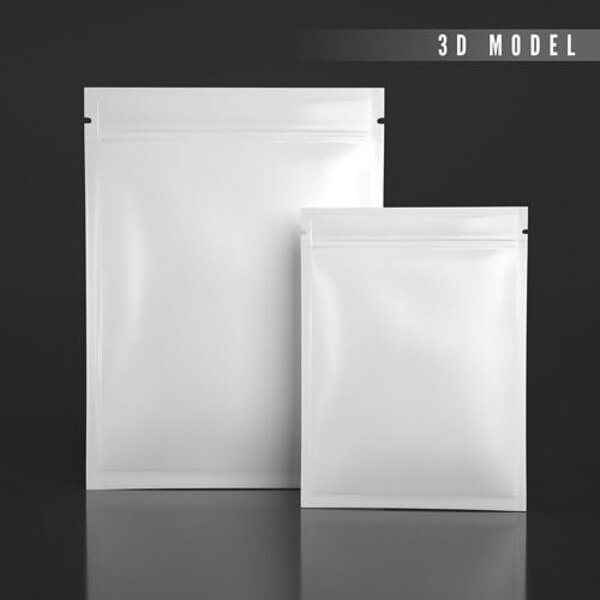
A three-side-seal D-cut pouch has two side seals, a sealed bottom edge, and an open top edge for filling. A die-cut D-shaped opening is formed in the top panel for carrying or hanging; it is not a separate handle.
Unlike a straight top edge, round hole, or butterfly hole, the D shape gives fingers a wider load-bearing path, but it removes more film and panel space.
The opening is useful for small packs sold for hand carrying, retail hanging, sampling, gifting, or use as secondary packaging. Keep the D-cut above the food fill and away from the top seal, leaving enough headspace for filling and sealing.
The cut does not automatically make the pouch safe for shelf hanging or heavy loads: a narrow seal, sharp internal corner, or overloaded pack can start a tear.
Choose three side seal d cut packaging when handling convenience justifies the lost panel area, die-cut trim, added conversion step, and reduced tear resistance near the opening. It suits products such as:
- Small snack portions
- Spice samples
- Dry ingredients
- Confectionery
- Pet treats
- Takeaway portions
For a heavy fill or a liquid that can leak through a stressed handle, use another format or validate the filled pouch with a load and drop trial before approval. A simple notch or no handle is more economical for some lightweight single-serve packs.
Choose pouch dimensions from the product, not its name
Start with the filled product’s weight, bulk density and settling behaviour, then calculate the usable pouch area. Measure the product after vibration or transport simulation, add headspace for sealing, and subtract both side seals, the bottom seal and the D-cut zone.
A quoted 150 × 220 mm pouch is not a 150 × 220 mm fill space.
| Opening choice | What it changes | When it applies |
|---|---|---|
| D-cut | Removes top-panel material and leaves a carry or hanging opening | Hand-carry packs with moderate loads |
| Round hole | Gives a smaller hanging point with more panel area retained | Lightweight retail hanging or sampling |
| Straight top edge | Preserves the most usable panel and sealing area | Packs filled into cartons, bins or secondary packaging |
Keep the cut-out above the product and outside the top-seal band. A large opening can reduce handling strength, expose the laminate and interfere with the filling machine. For oxygen- or moisture-sensitive food, inspect barrier continuity around the die-cut on a filled pouch rather than relying only on flat-film data.
For a custom d cut pouch, approve artwork on converted samples at the intended width, height and laminate gauge. Place the brand name and mandatory declarations away from seals, folds and the cut-out.
- Reserve a clear top margin for the filling level and final seal.
- Check barcode quiet zones, nutrition panels and small text after conversion.
- Specify artwork registration tolerance, D-cut position and usable fill dimensions.
- Request filled production samples; a flat digital mock-up cannot reveal shifted logos, folded text or a misaligned handle.
Match the laminate and food-contact documents to the product
Approve the pouch only after matching the product’s moisture, oxygen, aroma, light and grease sensitivity to measured laminate performance, then confirming the seal and food-contact documents.
| Structure | Barrier profile | Typical use and caution |
|---|---|---|
| PE/PE | Moisture barrier; limited oxygen, aroma and light protection | Short-shelf-life dry foods; verify shelf life rather than assuming suitability |
| PET/metPET/PE | Stronger light and gas barrier with heat-sealable PE | Snacks, spices and oxygen-sensitive foods; lower recyclability than a clear structure |
| PET/foil/PE | Highest light and gas protection among these options | Highly sensitive products; higher material cost and no visibility of the fill |
Request the exact food-contact layer, adhesive system, ink system and curing or aging period before filling. The outer web should be reverse-printed, with ink protected between layers; printing on the food-contact surface is not an acceptable default.
Obtain a declaration of compliance and migration test report covering the finished laminate, not only individual films. For India, check alignment with FSSAI Packaging Regulations, 2018 and ask which test method and simulants support the claim; suppliers using EU documentation should identify Regulation (EC) No 1935/2004 and, for plastics, Regulation (EU) No 10/2011.
Confirm adhesive suitability under 21 CFR 175.105 when a US claim is required.
Specify seal-initiation temperature, production sealing temperature, hot-tack result, final seal strength, seal width and leak-rate limit. Test filled pouches with product dust in the seal, then inspect barrier performance at the D-cut and top seal: the cut-out can expose or stress an otherwise intact high-barrier laminate.
Test the finished handle, seals and die-cut before production
Approve a three side seal D-cut pouch manufacturer in Ahmedabad only after filled pouches survive the load your customer will apply. Test the intended laminate, pouch dimensions, seal width, die geometry, corner radius and finished weight—not a flat-film tensile strip.
| Test | Evidence to record | Reject if |
|---|---|---|
| Handle load | Suspend filled pouches by the D-cut and record load, duration and failure location | The notch, seal or laminate interface tears before the specified load |
| Seal performance | Check seal-initiation temperature, production sealing temperature, hot tack and final seal strength | The seal opens while hot, peels after cooling or leaks |
| Dust tolerance | Fill with the actual powder, spice or snack product and deliberately contaminate part of the seal zone | The pouch leaks under the agreed leak test |
| Die-cut accuracy | Measure opening position, corner radius, seal clearance and headspace on production samples | A sharp corner enters the seal, fill area or top-seal zone |
| Artwork registration | Inspect logos and warnings on converted, filled pouches | Text shifts into the handle or folds across a seal |
Ask every food pouch manufacturer in Ahmedabad for samples made at production speed and the intended gauge. Run the same filled-weight and drop or carry test against every supplier; a clean laboratory seal is not comparable with a dusty production seal.
Amples Laminates LLP belongs in the comparison only after it supplies this evidence for the exact format quoted, rather than relying on a digital mock-up or an unfilled sample.
Write a purchase specification that prevents costly surprises
Give a d cut pouch supplier in Ahmedabad a written specification, not just a product name or a flat artwork file. State the following before requesting prices:
- Nominal pouch width and height, usable fill width and height, filling edge, headspace, and finished pouch orientation.
- Tolerances for width, height, seal width, laminate thickness, colour registration, D-cut position, cut-out width and height, and corner radius.
- Filled product, target fill weight, bulk density, product temperature, intended use, and the load the handle must carry.
- Laminate structure by layer, total gauge, food-contact layer, adhesive and ink systems, reverse-printing requirement, and curing or aging period before filling.
- Required OTR, WVTR, seal strength, seal-temperature range, and finished-pouch leak limit.
- D-cut geometry, top-seal location, minimum material around the opening, and whether the pouch is for carrying, hanging, sampling, or secondary packaging.
- Artwork file format, print colours, barcode grade, and the acceptable registration error.
- Quoted quantity, tooling or cylinder charges, production lead time, packing method, delivery location, and rejection or replacement terms.
Require production samples at the exact dimensions, laminate gauge, artwork, die geometry, and filled weight. Approve those samples only after checking the handle, notch, corner radius, top seal, and leakage around the cut-out.
Ask for a finished-pouch test report, not only flat-film data. The report should identify sample size, load duration, drop or carry method, seal settings, and the failure location.
Frequently asked questions
What does the D-cut change in a three-side-seal food pouch?
The D-cut forms a carrying or hanging opening directly in the top panel; it does not add a separate handle. Its shape affects grip, hanging use and the material left around the opening.
How should you choose dimensions for a three-side-seal D-cut pouch?
Start with the product’s volume, density, fill method, required headspace and seal width. Then test the filled pouch rather than selecting dimensions from the product name alone.
Which food-contact documents should you request for the laminate?
Request the laminate structure, food-contact declaration, applicable migration test report, ink and adhesive details, and batch traceability records. Match the documents to the food type, storage conditions and intended use.
What should you test before approving a custom D-cut pouch?
Test filled-pouch seal strength, leak resistance, handle or hanging strength, die-cut edge quality, opening clearance and performance after expected transport and storage conditions.
Keywords